Conserve Wildlife Blog

Archive for the ‘Invertebrates’ Category

Keeping Wildlife Range Maps Current

Sunday, September 2nd, 2012
RECENT UPDATES TO SPECIES RANGE MAPS

By Michael Davenport, Marine Species & GIS Programs Manager

The former and revised range maps for the Checkered White butterfly in New Jersey.

Just as world maps get updated with the addition of new countries (most recently South Sudan in 2011), wildlife range maps also need to be revised occasionally as new information becomes available.

There are 173 range maps available on Conserve Wildlife Foundation’s on-line field guide web pages for New Jersey’s endangered, threatened, and special concern species.  Although some of these maps were created only two years ago, 23 range maps were in need of minor to major revisions since new data had become available.  The range maps are based upon data within the NJ Department of Environmental Protection’s Biotics database, the official statewide database of rare wildlife.  While some new data was received from biologists’ surveys, a portion of it was received from the general public who submitted Rare Wildlife Sighting Report Forms for their own personal observations.

One of the most striking range map revisions is the Checkered White Butterfly.  Previously documented only at Newark Airport, this species has now also been documented in southern New Jersey.  Whether or not this disjunct population has been there all these years and not reported (flying under the radar so to speak), or this represents a recent natural range expansion or introduction is unknown at this point.

Take a tour of our on-line field guide – revised maps are labeled “2012”.

Freshwater vs. Marine Mussels

Monday, August 27th, 2012
THE CENTENARIANS VS. THE GREAT APPETIZERS

By Michael Davenport, Marine Species & GIS Programs Manager

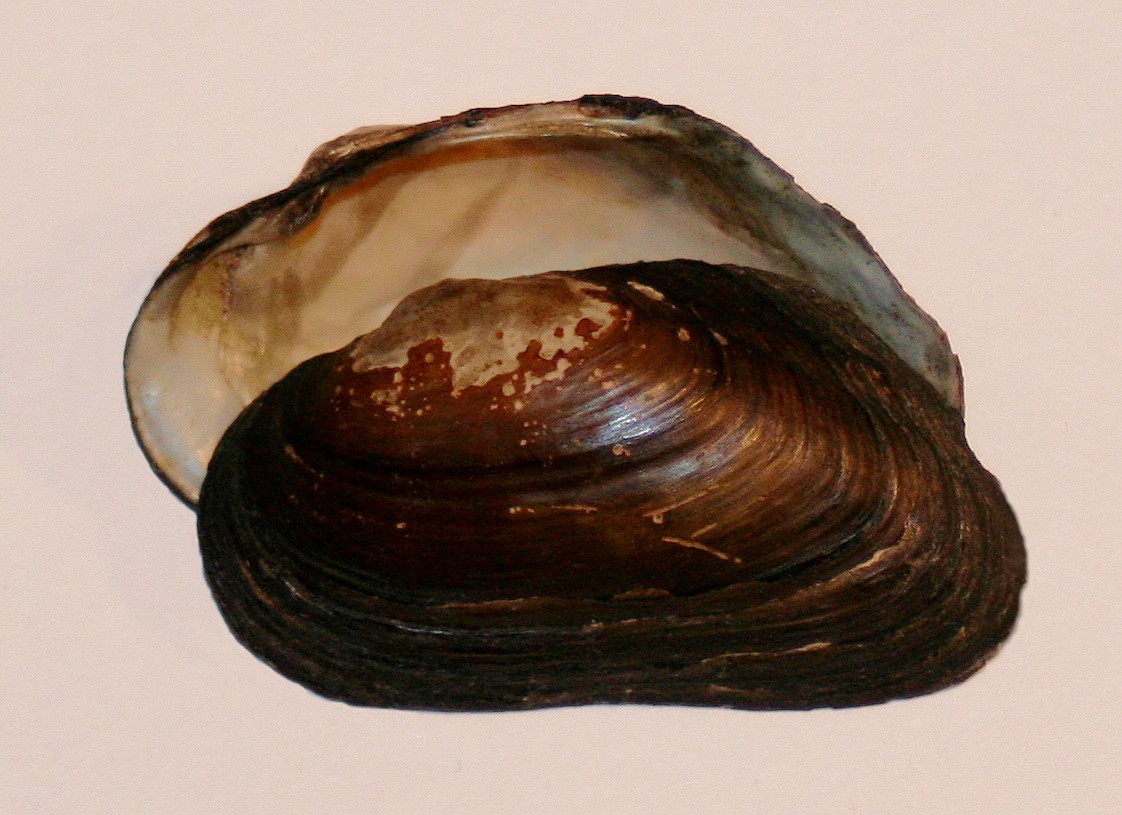
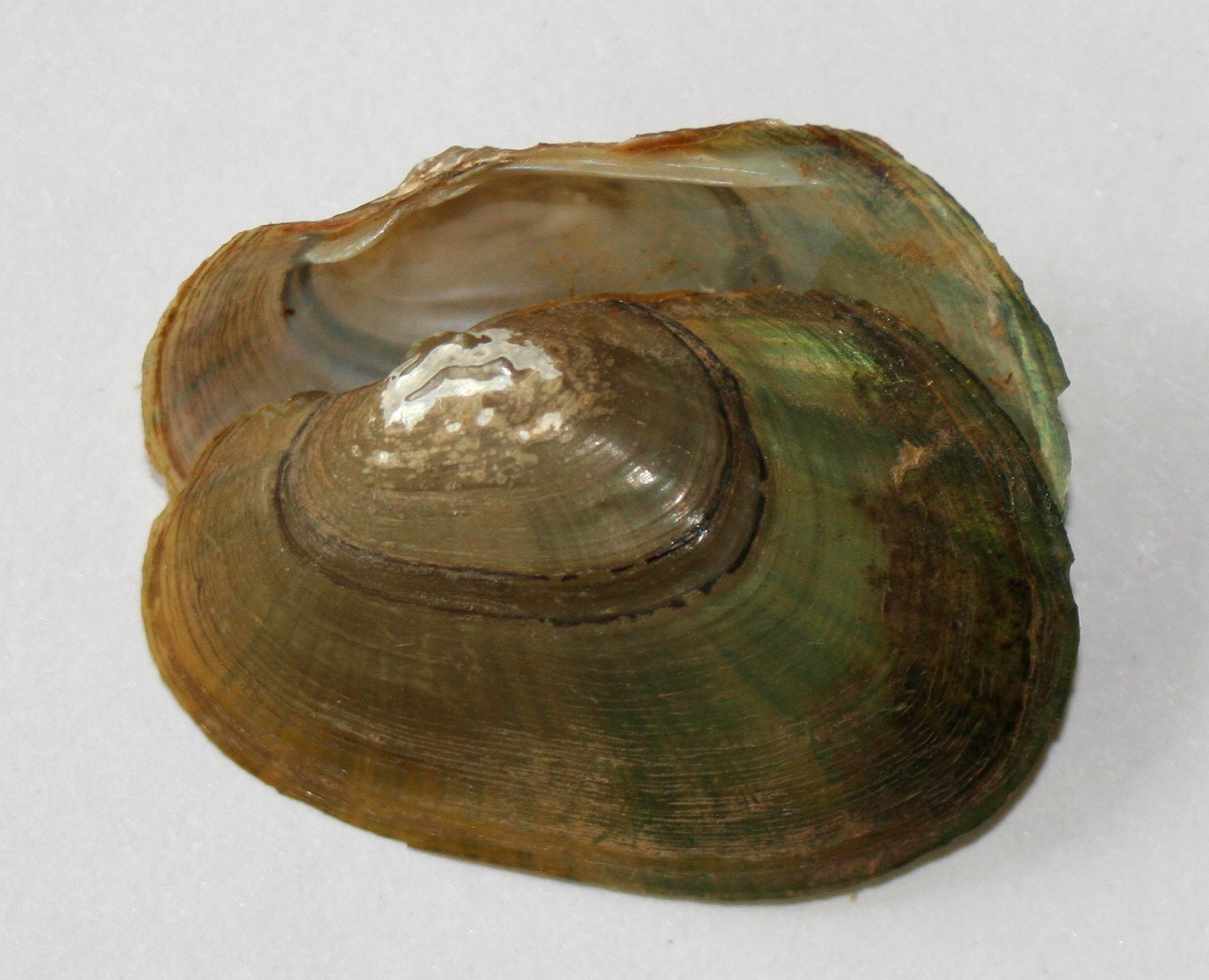
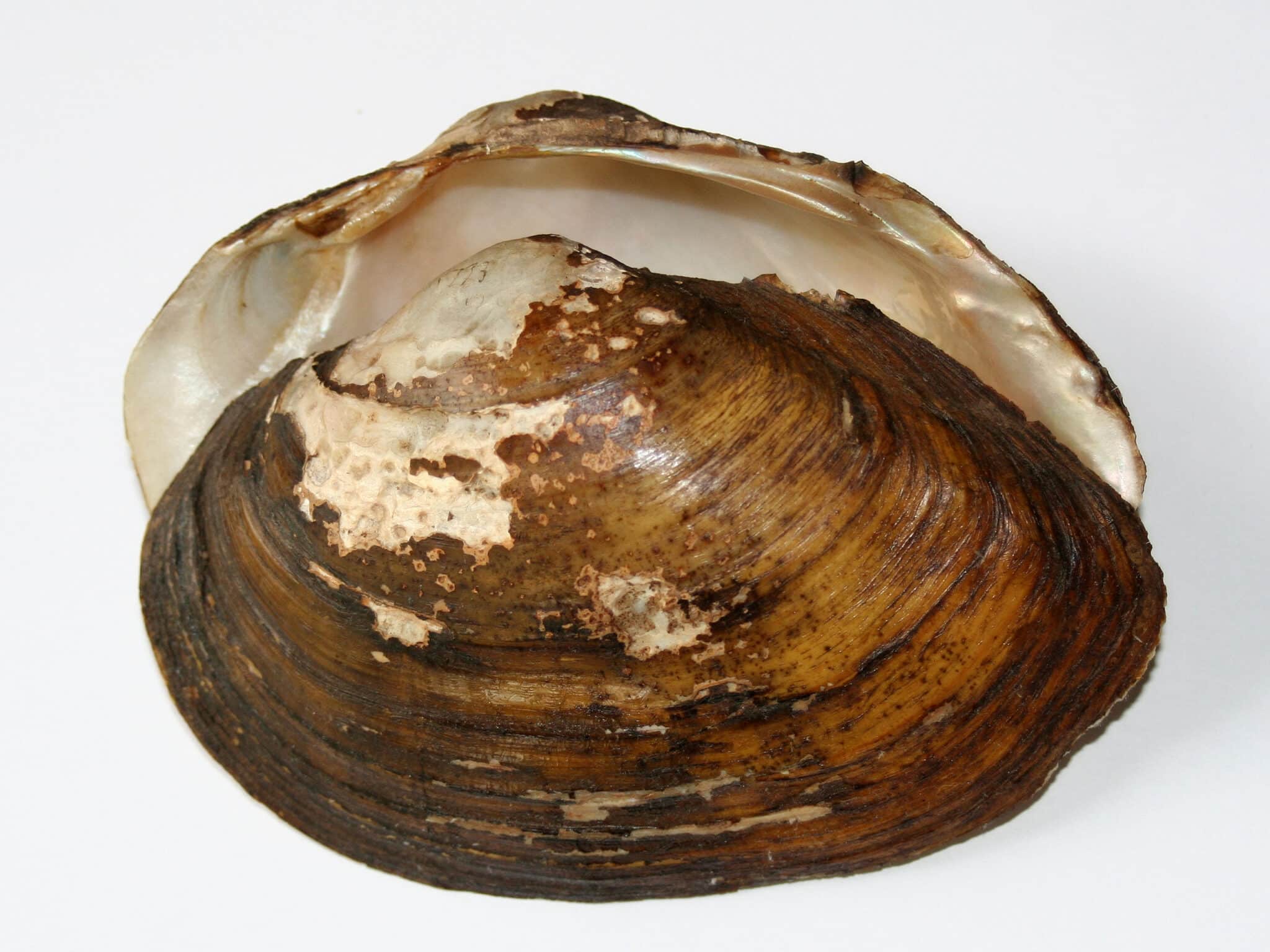
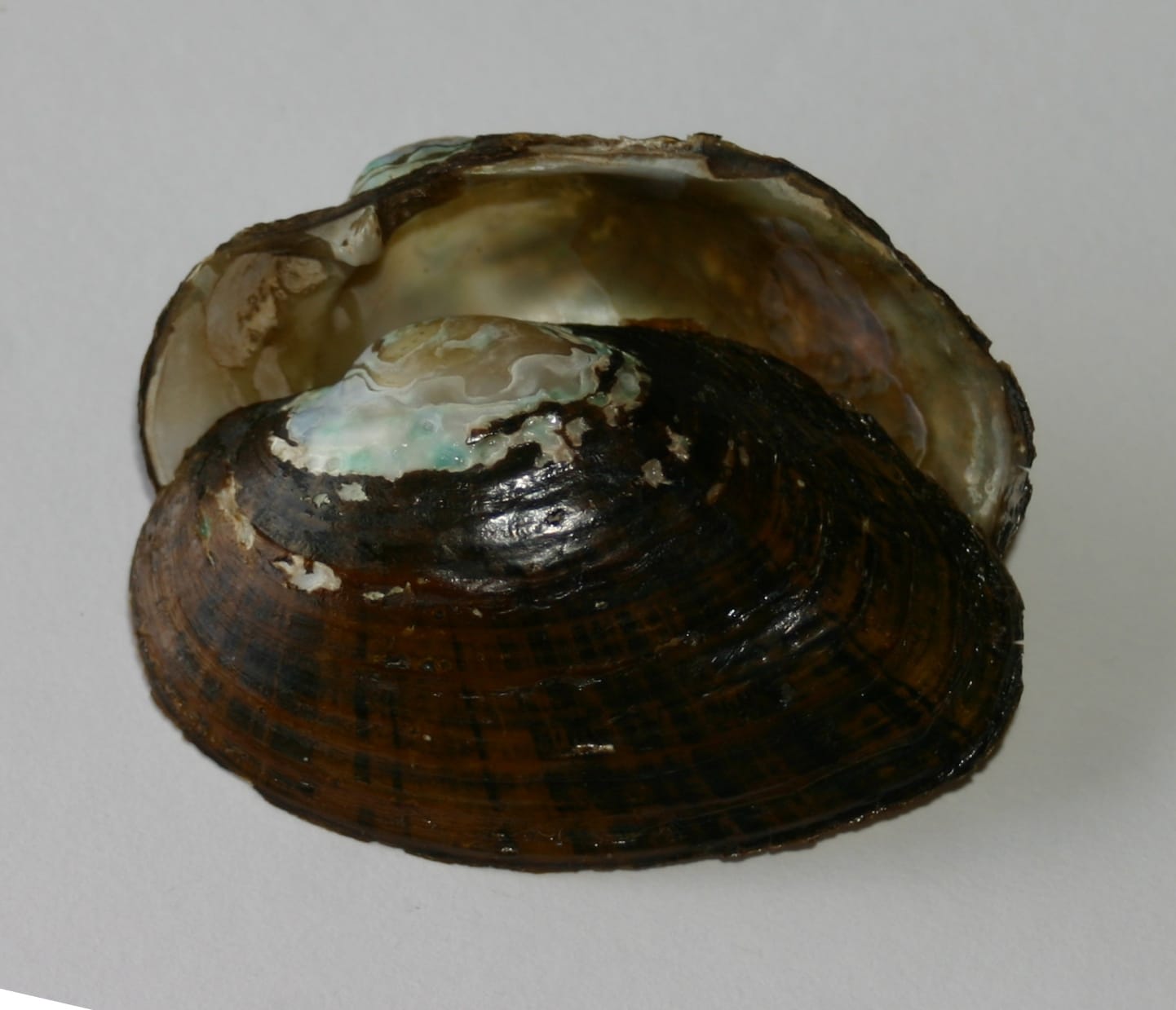
“Can you eat them?”  That’s the question I get most often when I tell people that I search for rare freshwater mussels.  Most people don’t realize that freshwater mussels even exist and those who do often don’t know how they are related to and different from their marine cousins.  I’ve been guilty of mussel misconceptions – as a child, I had believed that all the mussel shells I saw along lake shorelines and shallow waters were discards from a clam (mussel) bake of marine shellfish.

On the left is the freshwater eastern floater mussel and on the right is the marine blue mussel. Photo by Mike Davenport.

Let’s start with mussel similarities – both freshwater and marine mussels are bivalve (two-shells connected with a hinge) mollusks (soft-bodied invertebrates).  Both live in water and are filter-feeders, straining plankton (microscopic plants and animals), bacteria and other particles from the water column.  And both are known as “mussels” because they somewhat resemble each other, having shells which are longer than wide.  That ends the similarities.

Within the phylum Mollusca and the class Bivalvia, freshwater and marine mussels are within separate subclasses:  Palaeoheterodonta = freshwater mussels; Pteriomorphia = marine mussels.  Based on this separation, marine mussels are more closely related to oysters and scallops than they are to freshwater mussels.

One obvious difference between freshwater and marine mussels is that freshwater mussels live in freshwater streams, rivers, ponds and lakes while marine mussels live in salt water oceans and bays.  There is a higher diversity of freshwater mussel species in New Jersey (12 native species) than marine species (~ 3) and most of the freshwater species are imperiled while the marine mussels are still plentiful.

Marine mussels taste wonderful in a garlic butter or marinara sauce while freshwater mussels taste like an old dirty shoe.  Most freshwater mussels in New Jersey also have a protected status and cannot be harvested or collected.  Even possessing the shell of an endangered or threatened species is illegal without a permit.

Although unpalatable to humans, freshwater mussels are prey for raccoons, otters, and crayfish.  Marine mussels are prey for some birds, sea stars, and some marine snails.

Marine mussels reproduce by releasing their eggs and sperm into the water.  The young then begin life as floating plankton for between one and six months before settling on the bottom as an adult.  With freshwater mussels, the male releases sperm into the water which then enters the female via her incurrent siphon.  The eggs are fertilized within the female’s body and the young mussels, known as glochidia, are then released into the water to attach themselves to a passing fish as a parasite.  After feeding on the fish during their larval stage, they detach themselves, fall to the bottom, and begin their adult stage.

Most marine mussels (and the invasive freshwater Zebra mussel; which is not within either the Palaeoheterodonta or Pteriomorphia subclasses) use threads calls byssus to attach themselves to underwater rocks, jetties, and other structures.  Freshwater mussels are more mobile, using their powerful foot to move along the substrate and bury themselves.

Freshwater mussels are also known for their longevity.  Some species are known to live for over 100 years.  Although some marine clams are thought to surpass the century mark, marine mussel likely do not.

For more information about New Jersey’s freshwater mussels, please visit the links below:

National Moth Week, July 23rd through July 29th

Monday, July 23rd, 2012

The first National Moth Week (2012) will occur this week, July 23-29! 

The purpose of National Moth Week is celebrate these amazing insects and bring people together to learn about their importance.  Groups and individuals from all over the world will spend some time during National Moth Week looking for moths and sharing what they’ve found.

With more than 10,000 species in North America, moths offer endless options for study, education, photography, and fun. Moths can be found everywhere from inner cities and suburban backyards, to the most wild and remote places. The diversity of moths is simply astounding. Their colors and patterns range from bright and dazzling, to so cryptic that they define camouflage. Moth shapes and sizes span the gamut, with some as small as a pinhead and others as large as a hand.

Most moths are nocturnal and need to be sought at night to be seen, but others fly during the day. Finding moths can be as simple as leaving a porch light on and checking it after dark. Serious moth aficionados use special lights and baits to attract them. Popular interest in moths is rapidly growing, as noted by recent publications and web-based resources. The new Peterson Field Guide to the Moths by David Beadle and Seabrooke Leckie, moth caterpillar guides by David Wagner,  and a vast number of moth-oriented Internet resources such as the Moth Photographers Group and BugGuide are just some examples of moth’s growing popularity. Moths are also featured widely in literature and art providing a different angle for enjoyment and study. “Moth Nights” are often held by nature groups, and provide an opportunity for either an introduction to the creatures, or a venue for more serious pursuits.

To date, National Moth Week has more than 160 events planned all over the world in 16 countries and 46 US States. Participating countries include Australia, Canada, Costa Rica, Colombia, Czech Republic, French Guiana, Germany, India, Israel, Italy, Puerto Rico, Romania, Russia, Slovakia, the United Kingdom, and Venezuela.

National Moth Week was spearheaded by the Friends of the East Brunswick Environmental Commission.  National Moth Week’s partners include Butterflies and Moths of North America, BugGuide, Discover Life, The Lepidopterists’ Society, the North American Moth Photographer’s Group, The Pollinator Partnership, Project Noah, What’s That Bug and Wild New Jersey.

Join CWF at the Allaire Nature Center for a Moth Night this Friday, July 27th at 8pm. 

For more information, call Charlene at 732-567-3675.

Extinct & Extirpated Species of New Jersey

Friday, May 11th, 2012
NEW JERSEY’S LOST NATURAL HERITAGE

By Michael Davenport, Marine Species & GIS Programs Manager

The rusty-patched bumble bee, a species believed to be extirpated within New Jersey.

Conserve Wildlife Foundation of NJ (CWF) has just launched several new web pages devoted to those species which have been lost from New Jersey (and the world in some cases).  Ten species are profiled – five which are extinct and five which are extirpated from the state.   Although their stories are sad, they are also warnings for what may happen to other species which are currently struggling to survive within the state, especially those already on the state’s endangered species list.  CWF’s wildlife conservation projects attempt to avoid more species becoming extinct or extirpated in New Jersey.

CWF would like to thank Joseph Wotasek, a junior at Centenary College majoring in Graphic Design, who volunteered his time and skills in creating images of the ten profiled species for the new web pages.

To learn more about extinct and extirpated species, please visit CWF’s website at:  Extinct & Extirpated Species of NJ.

Observations of Rare Species Wanted!

Thursday, April 19th, 2012
NATURE WATCHING ISN’T JUST FUN, IT CAN BE USEFUL TOO

By Michael Davenport, Marine Species & GIS Programs Manager

Like many birdwatchers, although I still enjoy seeing the neighborhood cardinal in my yard, it’s the sightings of rarely encountered species, especially those classified as endangered, threatened, or special concern, which really keep my eyes scanning around during a hike.

Observations of Special Concern species, such as this Eastern Box Turtle, may be reported to the NJ Endangered Species Program. Photo by Mike Davenport.

Many birdwatchers, or nature enthusiasts of other species groups such as reptiles or butterflies, share their encounters with rare species on websites or bulletin boards.  In addition, several organizations, such as the Cornell Lab of Ornithology or NJ Audubon, recruit “citizen scientists” who collect species observation data and submit that data electronically via websites such as eBird.  That data is important for those organizations’ scientific research and assists scientists in analyzing population trends over years.  However, more often than not, it never finds its way to New Jersey’s state biologists nor the state regulators whose task it is to protect rare species habitat in the state.

The New Jersey Endangered and Nongame Species Program (ENSP) collects data for, not just rare birds, but all of the state’s endangered, threatened, and special concern species.  A Rare Wildlife Sighting Report Form is available on ENSP’s website for download as well as instructions for completing the form.  A complete list of all of the species tracked by the state can be downloaded here.

A map of the location of your observation, such as this one, should be sent with your Rare Wildlife Sighting Report Form.

Rare species data within the state’s database plays a critical role in wildlife and habitat conservation. It is the foundation of the NJ DEP’s Landscape Project, a GIS product that maps critical areas for imperiled species based upon species locations and land-use classifications. The resulting maps allow state, county, municipal, and private agencies to identify important wildlife habitats and protect them in a variety of ways. This information is used to regulate land-use within the state and assists in preserving endangered and threatened species habitat remaining in New Jersey.

Reporting your rare wildlife observation is easy.  Simply complete the form, attach a map of where the animal was observed, as well as any photographs taken, and then mail or e-mail the form and map to ENSP at the address provided on the form.  For more details about the state’s rare species mapping, please visit our webpage.