Amphibian Crossing Project
MacKenzie Hall
Amphibians serve important functions in the natural world
Why It Matters
More than 6,000 amphibian species exist worldwide, with approximately 300 species found in the United States, and 33 species calling New Jersey home. Since the 1970’s worldwide amphibian populations have been in decline. Scientists estimate that over 150 species have gone extinct since 1980 and one-third of all amphibian species are threatened. Habitat loss is the main cause of declines, but pollution, habitat degradation, and invasive species are also important factors. The recent emergence of major amphibian diseases, together with climate change, maybe the biggest threat to face amphibians yet.
Amphibians serve important functions in the natural world. They have a huge role in the nutrient cycle; serving as both predator and prey, they help keep our waters clean, pests under control, and nutrients moving up the food chain. Most amphibians have distinct larval and adult stages which are split between terrestrial and aquatic habitats – making them uniquely vulnerable to habitat loss and degradation.
Behavioral and physiological characteristics also make amphibians highly vulnerable to changes in their environment. Their porous skin – which is crucial for respiration, preventing dehydration, and even drinking – is incredibly sensitive to changes in temperature, the presence of contaminants, and even water chemistry like pH. Many amphibians are also philopatric, meaning they return to the pond where they were born to breed, but if ponds are destroyed or can no longer be accessed due to roads or other barriers – they may not breed. Environmental stressors like habitat loss, pollution, climate change (increased UV radiation, fluctuations in rainfall, and water temperature) can lead to deformities, delayed or premature metamorphosis, unsuccessful breeding, and even death.
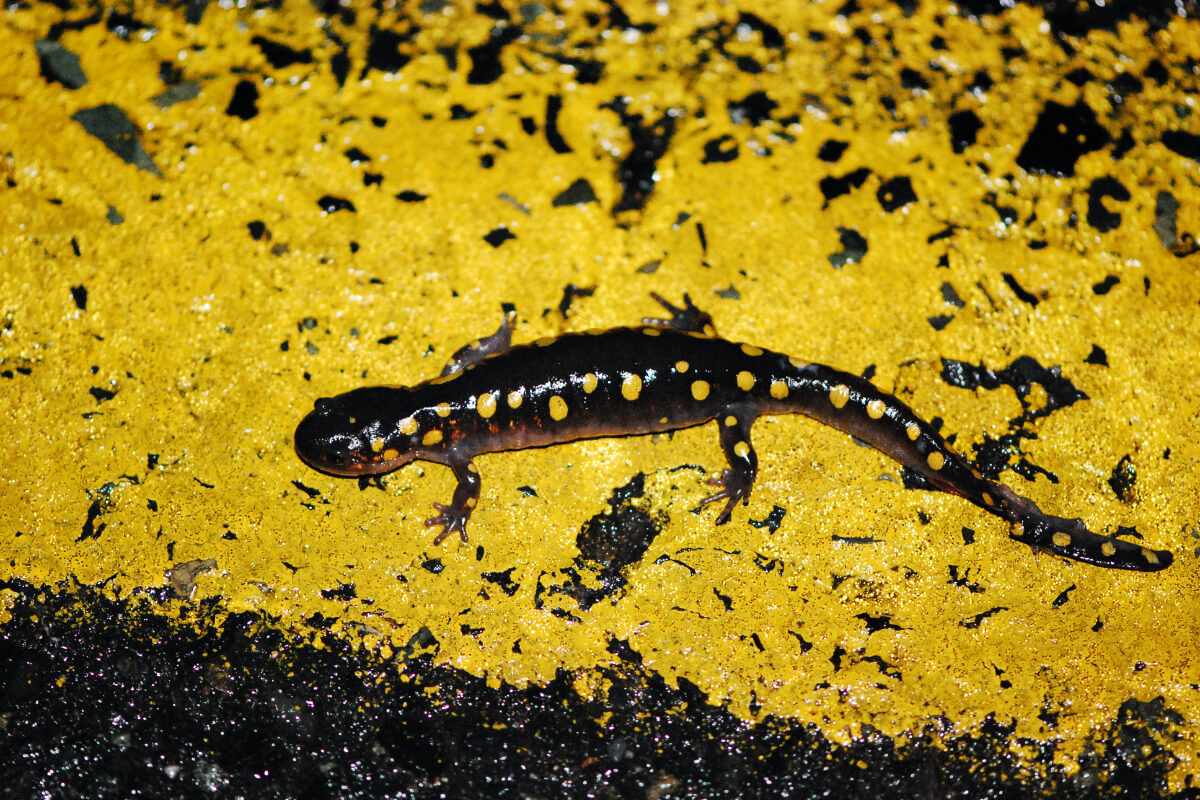
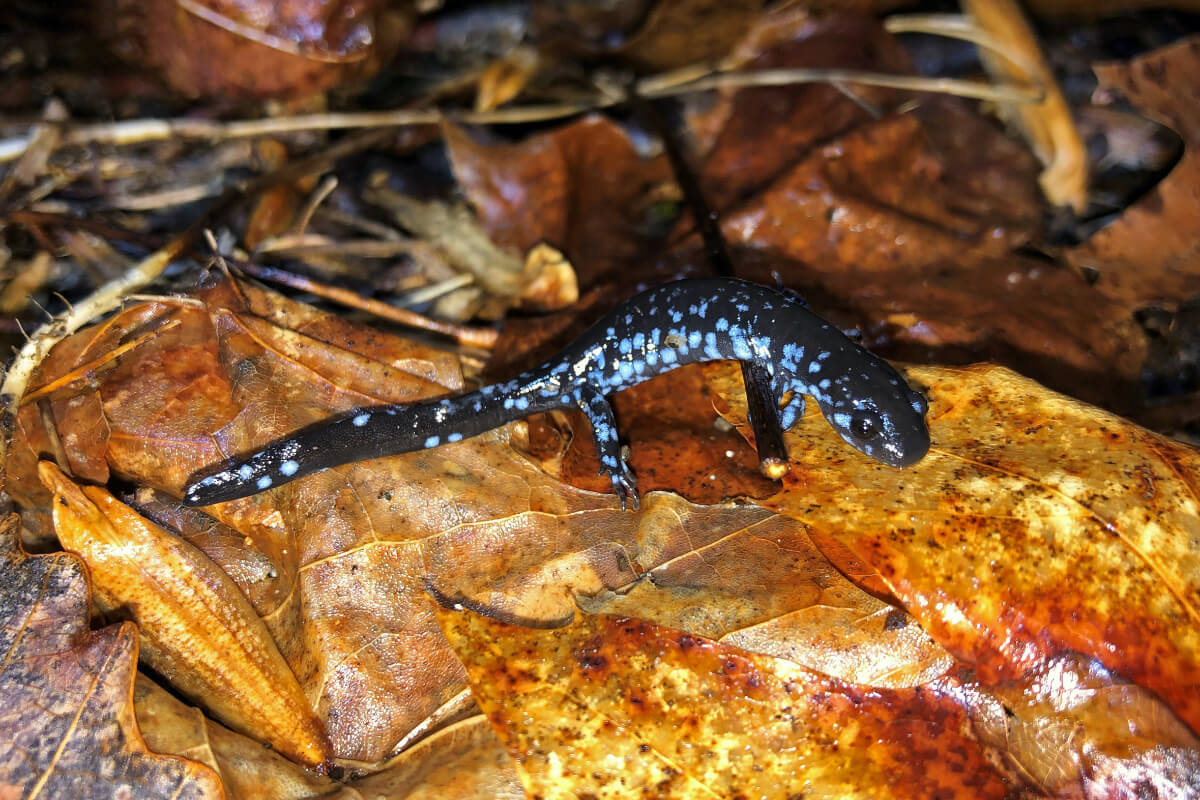
New Jersey’s population density and its massive web of roadways pose a deadly threat to amphibians who use vernal pools for breeding. Vernal pools are small, temporary bodies of water that appear in early spring as snow melts and rain and groundwater gathers, and disappear throughout the summer as they evaporate. Vernal pools are often located across a road from the rest of their habitat. Many species, such as wood frogs and spotted and Jefferson salamanders – both of which are listed as New Jersey species of Special Concern – rely exclusively on vernal pools for breeding. During their early-spring breeding migration, a single vehicle can crush dozens of these slow-moving animals as they try to cross the road.
Conservation Efforts
CWF works every spring on several road crossing projects, ensuring that at-risk frogs and salamanders are able to safely reach the vernal pools that their young depend on. Our biologists also conduct surveys for a variety of species in different habitats statewide, including species like the eastern tiger salamander and Atlantic Coast leopard frog.
CWF has partnered with the NJDEP Fish & Wildlife Endangered and Nongame Species Program since 2002 to protect early-spring breeding amphibians like the wood frog, spotted salamander, Jefferson salamander, and spring peeper during their annual migration. On peak nights each spring, we work with a fleet of incredible volunteers to hustle amphibians across the road at rescue sites, collect data on the numbers and species seen, measure the impacts of vehicular traffic, and document additional amphibian crossings for future protection.
We also aim to promote a more sustainable long-term vision. We hope that townships and community groups will use our model to take on protection of their local amphibians and to make road closures and/or volunteer efforts a part of the annual repertoire.
Additionally, an under-road tunnel system is planned for installation at our busiest amphibian crossing site within the next few years. Successful “critter crossings” at this priority site could pave the way for many other road permeability projects, allowing salamanders, frogs, and toads (as well as snakes, turtles, and other small animals) to safely and independently cross between their upland habitats and breeding pools each spring.
Finally, CWF biologists and dedicated volunteers survey vernal pools in South Jersey for eastern tiger salamander eggs and larva, as well as searching for new breeding pools. We also conduct surveys for the Atlantic Coast leopard frog – a species that was only discovered around a decade ago – at various locations in the northern New Jersey coastal area.
Donate to the Amphibian Crossing
Leah Wells
Wildlife Biologist
leah.wells@conservewildlifenj.org